Summary:
Most families don’t start here with a clear plan. They start with a feeling — that the ocean is the right place, that their loved one would have wanted this, that a cemetery plot doesn’t quite fit. That feeling is valid. Sea scattering is a genuinely beautiful way to say goodbye, and it’s more accessible than most people realize.
But before you get to the ceremony itself, there are a few things worth understanding — the legal requirements, what your options actually are, and how to make sure the day feels the way you need it to feel. This guide covers all of it.
Spreading Ashes at Sea: What the Process Actually Involves
The basics are straightforward. Under federal EPA regulations, cremated remains can be scattered at sea as long as the vessel travels at least three nautical miles from shore. That’s the legal minimum under the Marine Protection, Research, and Sanctuaries Act — and it applies everywhere in US waters, including New York.
After the scattering, we notify the EPA within 30 days. That’s it. No prior permits, no lengthy approval process. We handle the reporting on your behalf, so your family doesn’t have to navigate any of that paperwork during an already difficult time.
What matters most is choosing a service that takes the ceremony seriously — not just the legal boxes, but the experience itself.
Ashes at Sea: Attended vs. Unattended Ceremonies
There are two main ways families approach an ash scattering at sea, and neither is more meaningful than the other — it depends entirely on what works for your family.
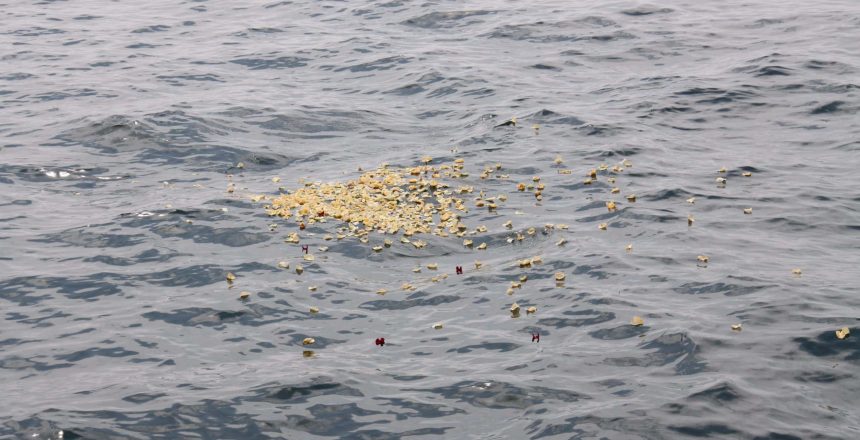
An attended ceremony means you and your guests board the vessel and participate directly. You’re on the water when the ashes are released. You can speak, play music, say a prayer, toss flowers, or simply stand together in silence. For many families, being physically present for that moment is what makes it feel complete. It’s the kind of ceremony people describe years later as the most beautiful funeral they’ve ever attended.
An unattended service — sometimes called a Captain’s Service — is when the captain conducts the scattering respectfully on your family’s behalf. This option exists for a real reason: not every family can travel, not every family is in a position to be on the water, and sometimes the person who passed had no local family at all. It’s not a lesser option. The ceremony is still conducted with full care, and your family still receives a certificate documenting the GPS coordinates of where the ashes were scattered — a permanent record of the final resting place.
Both options are EPA-compliant. Both result in the same documentation. The difference is simply whether you’re there in person.
For families in Queens County who want to attend, our vessel departs from Freeport, NY — about 20 to 30 minutes from most Queens neighborhoods, whether you’re coming through the Rockaway Peninsula or via the Southern State Parkway. The journey out to sea passes familiar water. For many Queens families, the ocean isn’t abstract — Rockaway Beach is part of the borough’s identity, and the Atlantic is something people here grew up near. That familiarity tends to make the ceremony feel grounded rather than unfamiliar.
One practical note worth knowing: you cannot legally scatter ashes from the beach, a pier, or anywhere within NYC Parks boundaries — that includes Jamaica Bay and the Rockaway shoreline. NYC Parks explicitly prohibits it, and federal law requires the three-nautical-mile minimum regardless. An offshore service with us isn’t just more meaningful — it’s the only legally compliant option for Queens County families.
Charter Boats for Scattering Ashes: What to Look for Before You Book
Not every boat that offers ash scattering is set up for it in any meaningful way. Some are fishing charters or party boats that occasionally scatter ashes as a side offering. That’s a real distinction worth understanding before you commit.
A vessel designed — or properly configured — for memorial services makes a physical difference. The height of the boat above the waterline matters more than people expect. A vessel that sits high means families are leaning over a railing to release the ashes, which is awkward at best and undignified at worst. A boat that sits low in the water allows you to release the ashes directly into the ocean — a natural, unobstructed gesture that honors the moment the way it deserves to be honored.
The captain’s credentials matter just as much. A US Coast Guard Master License is the highest level of federal maritime certification available. It requires documented sea time, federal examinations, and ongoing renewal — it’s not a recreational boating license or a basic charter credential. When you’re trusting someone with your loved one’s final farewell, knowing the person at the helm holds that credential is meaningful.
Weather is the other practical consideration most families don’t think about until it becomes a problem. Ocean conditions around New York can shift quickly, and a ceremony planned for a calm October morning can face rough seas by the time you reach the dock. A charter service with a heated, enclosed cabin changes the calculus entirely. It means the ceremony can happen in January or February if that’s when your family is ready — you’re not waiting for a weather window that may not come until spring. Flexible rescheduling matters too, because sometimes conditions change and you need to move the date without feeling penalized for it.
The other thing worth asking about: what’s actually included. Biodegradable urns, GPS documentation, ceremony coordination, the option to have a priest or clergy member present — these are details that separate a thoughtful service from a transactional one. Your family shouldn’t have to source a compliant urn separately or wonder whether the paperwork will be filed. We handle all of it.
Planning Your Ash Scattering Ceremony: Timing, Customization, and What the Day Looks Like
Once you’ve decided on sea scattering and found the right vessel, the ceremony itself is yours to shape. There’s no single way to do this. Some families want something quiet and private — just a few people, the water, and a moment of stillness. Others want music, readings, flowers on the water, and a celebration of a life fully lived.
The most important thing is that the ceremony reflects the person you’re honoring. Everything else is detail — and we’ll help you work through those details without making you feel like you’re filling out a form.

How to Personalize an Ash Scattering Ceremony at Sea
Personalization is where a sea ceremony can really separate itself from a traditional funeral service. You’re not constrained by a chapel’s schedule or a cemetery’s rules. The ceremony happens on open water, and the tone is entirely up to you.
Music is one of the most common ways families make the ceremony feel specific to their loved one. A playlist that meant something to them — their favorite songs, something from a meaningful era of their life — changes the emotional texture of the whole experience. It’s a small thing that carries a lot of weight.
Flowers on the water are another element families often include. Releasing flower petals after the ashes have been scattered gives everyone present something to do with their hands in a moment that can otherwise feel overwhelming. It’s a gesture that’s both simple and quietly profound.
For religious families, having a priest or clergy member present transforms the ceremony into something sacramental. Queens County is one of the most culturally and religiously diverse places in the country — large Catholic, Orthodox Christian, Hindu, Buddhist, and Caribbean communities all call this borough home. For Hindu families in particular, scattering ashes in a body of water carries deep religious significance, with the ocean serving as a meaningful stand-in for sacred rivers when that’s not possible. Whatever your tradition, the ceremony can be shaped around it. We can accommodate religious rites, prayers, and specific cultural customs — and we can arrange for clergy to be present if that’s important to your family.
Military families have options too. Veterans and their families can incorporate honors into the ceremony, and we’re experienced in accommodating those elements with the respect they deserve.
There’s also no rule about timing. Many families wait weeks or even months after cremation before planning a scattering ceremony. Grief doesn’t move on a schedule, and neither does this process. When your family is ready, the water will be there.
Common Questions Queens County Families Ask Before Planning a Sea Ceremony
A few questions come up almost every time a family starts thinking through this process. They’re worth addressing directly.
The most common one: is this actually legal? Yes — fully, under federal EPA regulations, as long as the scattering happens at least three nautical miles from shore and we notify the EPA within 30 days. In Queens County specifically, it’s worth knowing that scattering ashes from any NYC Parks beach or waterway — including Rockaway Beach or anywhere along Jamaica Bay — is explicitly prohibited. The offshore requirement isn’t just a federal rule; it’s the only legal path available to Queens County families who want to do this properly.
The second question families almost always ask is about weather. What happens if conditions are bad on the day of the ceremony? Flexible rescheduling means you’re never locked into a date that doesn’t work — ocean conditions around the New York Bight can be unpredictable, and we build that reality into our policies. Our vessel, the Seaspray, also has a heated enclosed cabin, which means even a cold or overcast day doesn’t have to derail the experience. You’re not standing on an open deck in February hoping for the best.
Families also ask about documentation — specifically, whether they’ll have any record of where the ashes were scattered. After every ceremony, we provide a Certificate of Final Rest that includes the GPS coordinates of the exact location. It’s a permanent record. Families can share it with relatives who couldn’t attend, return to the approximate area on an anniversary, or simply have it as something tangible from the day.
One question that doesn’t get asked often enough: can we bring our pet? The answer is yes. For families whose loved one had a cherished animal companion, bringing that pet along on the ceremony is something we genuinely welcome. It’s a detail that matters more than it might sound.
Finally, some families worry about the ceremony feeling rushed or impersonal. That’s a real concern, and it’s worth saying plainly: we don’t treat this like a timed charter. Maria Brusalis, our dedicated Sea Burial Coordinator, is your point of contact from the first conversation to the final certificate. She’s not a booking agent. She understands what this process involves, and she’ll help you plan something that actually reflects your loved one — not a generic ceremony that could belong to anyone.
Planning an Ash Scattering in Queens County, NY: Where to Start
Sea scattering is one of the few farewell options that manages to feel both timeless and deeply personal. The ocean doesn’t belong to any one tradition or religion — it’s simply vast, and permanent, and moving. For a lot of families, that’s exactly right.
If you’re in Queens County and you’re trying to figure out whether this is the right choice, the short answer is that it’s worth a conversation. The legal side is simpler than most people expect. The ceremony itself can be shaped around whatever matters to your family. And the logistics — the vessel, the documentation, the EPA reporting — are handled for you.
We’re here when you’re ready to talk through it. No pressure, no hard sell — just a straightforward conversation about what the process looks like and whether it fits what you have in mind.