
Summary:
If your veteran expressed a wish to be returned to the sea — or if you’re looking for a ceremony that actually reflects the weight of their service — you’re in the right place. Planning a military cremation sea burial involves more moving parts than most families expect: eligibility requirements, discharge paperwork, federal regulations, and the question of whether you can even be there when it happens. This page walks through all of it clearly. By the end, you’ll know exactly what a military sea burial involves, what separates a meaningful private ceremony from a generic scattering, and what to look for when choosing a provider off the Queens County coastline.
US Navy Burial at Sea: What It Covers and Where It Falls Short
The US Navy does offer a burial at sea program, and it’s available at no cost to eligible veterans and their dependents. The Navy performs roughly 1,500 cremated remains burials per year through this program — a meaningful option, and one worth understanding before you decide anything.
The catch, and it’s a significant one, is that families cannot attend. Ceremonies take place aboard active Navy vessels during scheduled deployments. There’s no date you can plan around, no deck to stand on, no moment where you personally release the ashes. For many families, that’s not a ceremony — it’s a logistics arrangement. If being present matters to you, a private cremation sea burial is the only way to make that happen.
Military Burial at Sea Eligibility: Which Veterans and Family Members Qualify
Eligibility for military burial at sea is broader than most families realize. Through the Navy’s official program, the following are eligible: active duty members of all uniformed services, honorably discharged retirees and veterans from any branch, US civilian marine personnel of the Military Sealift Command, and dependent family members of active-duty personnel, retirees, and veterans.
That last category surprises people. A veteran’s spouse, child, or dependent is eligible — not just the veteran themselves. And the eligibility extends across every branch. Army, Air Force, Marine Corps, and Coast Guard veterans all qualify, not just those who served in the Navy. The sea has never belonged exclusively to one branch.
For a private ceremony — which is what we provide — eligibility isn’t gated by the same federal criteria. Any family can arrange a private cremation sea burial regardless of military status. But for families of veterans specifically, a private ceremony allows you to incorporate the military honors, the flag presentation, and the ceremonial elements that reflect actual service — while also letting you be there on the water when it happens.
What you’ll need for a military sea burial, whether through the Navy or a private provider, typically includes the DD-214 (Certificate of Release or Discharge from Active Duty), a certified death certificate, a cremation certificate confirming the remains have been cremated, and a completed burial at sea request form. The DD-214 is the key document — it establishes the veteran’s honorable discharge and branch of service, which determines what military honors apply. If you’re having trouble locating a DD-214, the National Personnel Records Center can issue a replacement, though that process can take time, so it’s worth starting early.
Our burial coordinator, Maria Brusalis, walks every family through this documentation process from the first call. You don’t have to figure out what’s missing or navigate federal records offices alone — that’s part of what we’re here for.
What a Private Military Burial at Sea Ceremony Actually Looks Like
A private military cremation sea burial is not a generic ash scattering with a flag folded nearby. When it’s done right, the ceremony is built around the veteran — their branch, their beliefs, their family’s wishes — and it takes place on open water, far enough offshore that the city disappears and the horizon is all there is.
We depart from Freeport, NY, aboard the Seaspray, a Coast Guard-inspected vessel captained by Master Captain Scott Schafer, who holds a US Coast Guard Master License — the highest tier of commercial maritime certification. For military families who understand what credentialing means, that distinction matters. This isn’t a recreational boat repurposed for the day. It’s a vessel formally inspected and licensed to carry passengers, operated by a captain whose qualifications are federally verified.
We travel a minimum of 3 nautical miles offshore before the ceremony begins — meeting EPA requirements under the Marine Protection, Research, and Sanctuaries Act, and putting your family genuinely at sea, not hovering near the shoreline. The Seaspray sits low in the water, which makes it accessible for elderly family members, fellow veterans who may have mobility challenges, and anyone who wants to release the ashes directly into the ocean without leaning over a high railing.
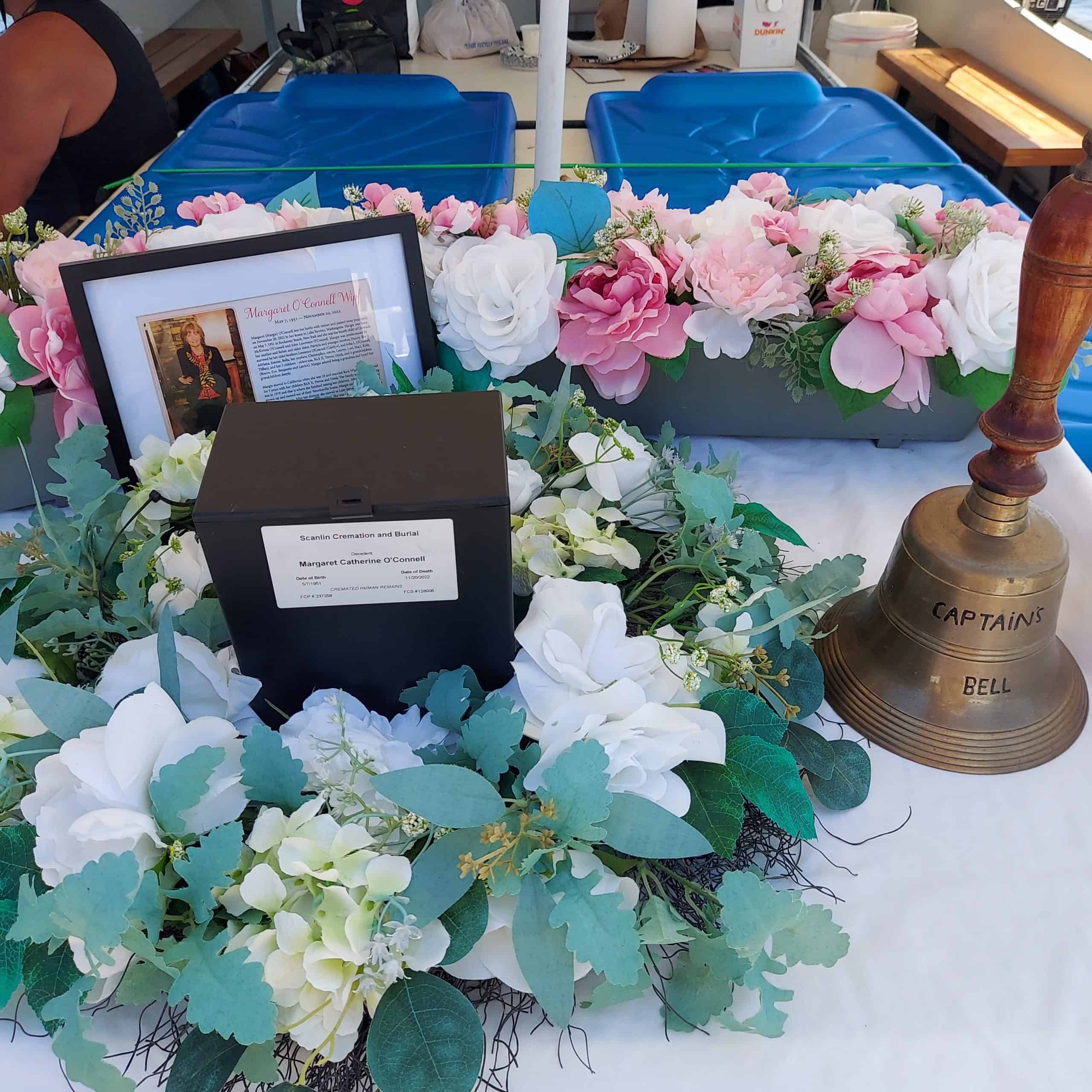
Ceremony elements can include flag presentation, prayers, a moment of silence, floral tributes, and readings tailored to the veteran’s life and service. If your family observes a specific faith tradition, we can coordinate clergy. If you want a ceremony shaped around military protocol, we build it that way. After the service, every family receives a certificate with the GPS coordinates of the exact location where the ashes were scattered — a permanent, specific address in the Atlantic that families can return to in spirit, mark on a map, and pass down.
We also handle all required permits and the EPA Region 2 notification, which must be submitted within 30 days of the scattering. That’s the regional EPA office at 290 Broadway in Manhattan — the governing authority for sea burials off the New York and Long Island coast. You won’t need to navigate that process yourself.
Burial at Sea for Veterans in Queens County, NY: What Families Here Are Actually Dealing With
Queens County is the largest borough in New York City by land area, home to more than two million people and a substantial veteran population spread across neighborhoods from Jamaica to Astoria to the Rockaways. Many of those veterans served in every conflict from World War II through Afghanistan, and their families are now navigating end-of-life decisions in a county where cemetery space is finite, expensive, and increasingly impractical.
Calvary Cemetery and St. John’s Cemetery — two of the largest in the United States — are both in Queens County. Families who have watched those cemeteries fill up over generations understand why sea burial has become a meaningful alternative. The ocean isn’t a compromise. For a lot of veterans and their families, it’s the right place.
How Far Is the Departure Point from Queens County, and What Should Families Expect?
We depart from Freeport, NY, at 1 Anchorage Way, Slip A23 — roughly 25 to 30 miles from central Queens County neighborhoods. From Jamaica, Flushing, or Ridgewood, you’re looking at a straightforward drive via the Southern State Parkway or the Atlantic Beach Bridge, without navigating Manhattan traffic or dealing with the logistics of a city-based departure.
For Queens County families, the South Shore of Long Island isn’t unfamiliar territory. Many residents cross to the Rockaways or Long Beach regularly, and the waters off Point Lookout — where our ceremonies take place — are the same Atlantic waters that border the southern edge of the county. There’s a geographic familiarity there that makes the ceremony feel connected to home rather than distant from it.
The Seaspray operates year-round, including fall and winter months when many providers go dark. The vessel has a heated cabin, which means families planning a ceremony in November or February don’t have to wait until spring. Grief doesn’t have a season, and neither do we. Pets are also welcome on board — a detail that sounds small but means a great deal to families whose veteran had a dog that was part of the household for years.
We also want to be straightforward about one practical detail: payments are nonrefundable, but we offer flexible rescheduling if weather or circumstances require a change of date. We hold your ceremony date seriously, and if something comes up, we work with you to find a new one.
Queens County Veteran Families Often Ask: Can We Bring Everyone Who Wants to Come?
This comes up in almost every conversation. Military families tend to be large — spouses, children, grandchildren, fellow veterans from the same unit or post, neighbors who knew the veteran for decades. The concern is always whether there’s room, whether elderly guests can manage a boat, and whether the experience will feel comfortable for people who aren’t regular sailors.
The Seaspray is designed with accessibility in mind. Its low profile makes boarding easier and ash release more natural — you don’t need to be physically strong or agile to participate fully in the ceremony. For family members who use canes, walkers, or simply move more slowly, that design detail matters more than most people think about in advance.
Catering is available on board — breakfast, lunch, dinner, and drinks — so families who want to extend the time together after the ceremony have that option. Some families use the return journey as a chance to share stories, look at photos, and simply be together on the water. Others prefer quiet. Either is completely fine.
For Queens County families with ties to the veteran community — through American Legion posts, VFW chapters, or the Queens County Veterans Advisory Board — word about the ceremony can spread naturally. We’ve found that families who share their experience with other veteran households often become the reason another family finds their way to us. That kind of trust, passed between people who’ve been through similar losses, means more than any advertisement.
If you’re not sure how many people you want to bring or what the ceremony should look like, that’s exactly the kind of conversation to have with Maria Brusalis before you commit to anything. She’ll help you figure out what makes sense for your family, your veteran, and the service they deserve.
Planning a Military Cremation Sea Burial: What to Do Next
The most important thing to know is that you don’t have to figure this out alone. Between the DD-214, the death certificate, the EPA notification, and the ceremony itself, there are a lot of moving parts — and most families are managing all of it while grieving. The right provider handles the logistics so you can focus on being present.
A military cremation sea burial done well is, by every account from families who’ve been through it, unlike any other funeral experience. The open water, the ceremony tailored to actual service, the specific coordinates of a final resting place — it adds up to something that feels genuinely honoring rather than procedural.
If you’re in Queens County, NY, or anywhere in the surrounding area and you’re starting to think through options, reach out to us at Eternal Peace Sea Burials. We’ll walk you through everything at whatever pace works for your family.